Discover why chocolate ganache is the secret weapon for professional bakers looking to achieve razor-sharp edges and a flawless finish on celebration cakes.
When you see a cake that looks more like a polished marble sculpture than a dessert, you are likely looking at the magic of chocolate ganache. There is a specific kind of architectural satisfaction in a cake with edges so sharp they look like they could cut glass. While buttercream has reigned supreme in home kitchens for decades due to its accessibility and sweetness, it often lacks the structural integrity required for that high end, professional finish. For those who crave precision, ganache is the gold standard. It transforms a humble sponge into a sophisticated centerpiece, providing a canvas that is as firm as it is beautiful.
The Science of Stability and Set
The primary reason ganache produces a sharper finish than buttercream lies in its chemical composition. Buttercream is essentially an emulsion of fat and sugar, often aerated with air bubbles. Because it relies on butter, its stability is entirely dependent on room temperature. If the room is slightly warm, the butter softens, and the edges of your cake begin to rounded or sag. Ganache, on the other hand, is a blend of chocolate and heavy cream. Because chocolate contains cocoa butter, which is a hard fat at room temperature, ganache undergoes a physical transformation as it cools. It sets into a firm, semi rigid shell. This setting process allows a pastry chef to scrape the sides with a metal bench scraper and achieve a level of flatness that airy buttercream simply cannot sustain.
The Strength of the Foundation
A sharp cake requires a foundation that does not move. When you apply pressure to buttercream with a palette knife, the frosting tends to push and pull because of its soft, pillowy texture. Ganache acts more like a construction material. Once it begins to firm up, it resists the movement of the spatula, allowing the decorator to exert more control over the angles. At WaraCake, we often use ganache under fondant or as a standalone finish because it provides a structural crate for the cake layers inside. This strength is particularly useful for tall, multi tiered cakes where the weight of the upper layers might cause a softer frosting to bulge at the seams. Ganache holds its shape under pressure, ensuring the silhouette remains a perfect cylinder or square.
Achieving the Infamous Sharp Edge
To get those crisp, ninety degree angles at the top of a cake, decorators often use a technique involving two acrylic disks or the upside down method. This process is significantly more successful with ganache. Because ganache sets hard in the fridge, you can flip a cake upside down on a piece of parchment paper, coat the sides, and then flip it back over once it is chilled. When you peel the paper away, the ganache stays exactly where it was pressed, leaving a perfectly flat top and a razor sharp rim. Trying this with buttercream often results in the frosting sticking to the paper or losing its shape the moment it starts to reach room temperature. The firmness of the chocolate is the secret ingredient to that geometric perfection.
Temperature Resistance and Durability
Lagos environments or any warm climate can be the enemy of a beautifully decorated cake. Buttercream is notorious for sweating or melting under the heat of bright event lights or humid afternoons. Ganache is far more resilient. While it will eventually soften in extreme heat, its melting point is higher than that of standard butter based frostings. This durability means that once those sharp edges are created, they stay sharp. A cake transported in a car or displayed at a wedding reception for several hours is much more likely to maintain its pristine, professional look if it is encased in a chocolate shell rather than a whipped dairy one.
The Ideal Canvas for Smoothness
Texture plays a massive role in how sharp a cake appears to the eye. Even the smoothest buttercream often has tiny air pockets or a slightly granular look from the sugar. Ganache is a liquid emulsion that becomes a solid, meaning it is inherently denser and smoother. When you run a hot scraper over chilled ganache, it melts the outermost microscopic layer, filling in any tiny imperfections and leaving a surface that looks like satin. This ultra smooth surface reflects light differently than buttercream, emphasizing the straight lines and corners of the cake. It is this interaction with light that gives ganache cakes their signature high definition appearance.
Versatility in Decoration
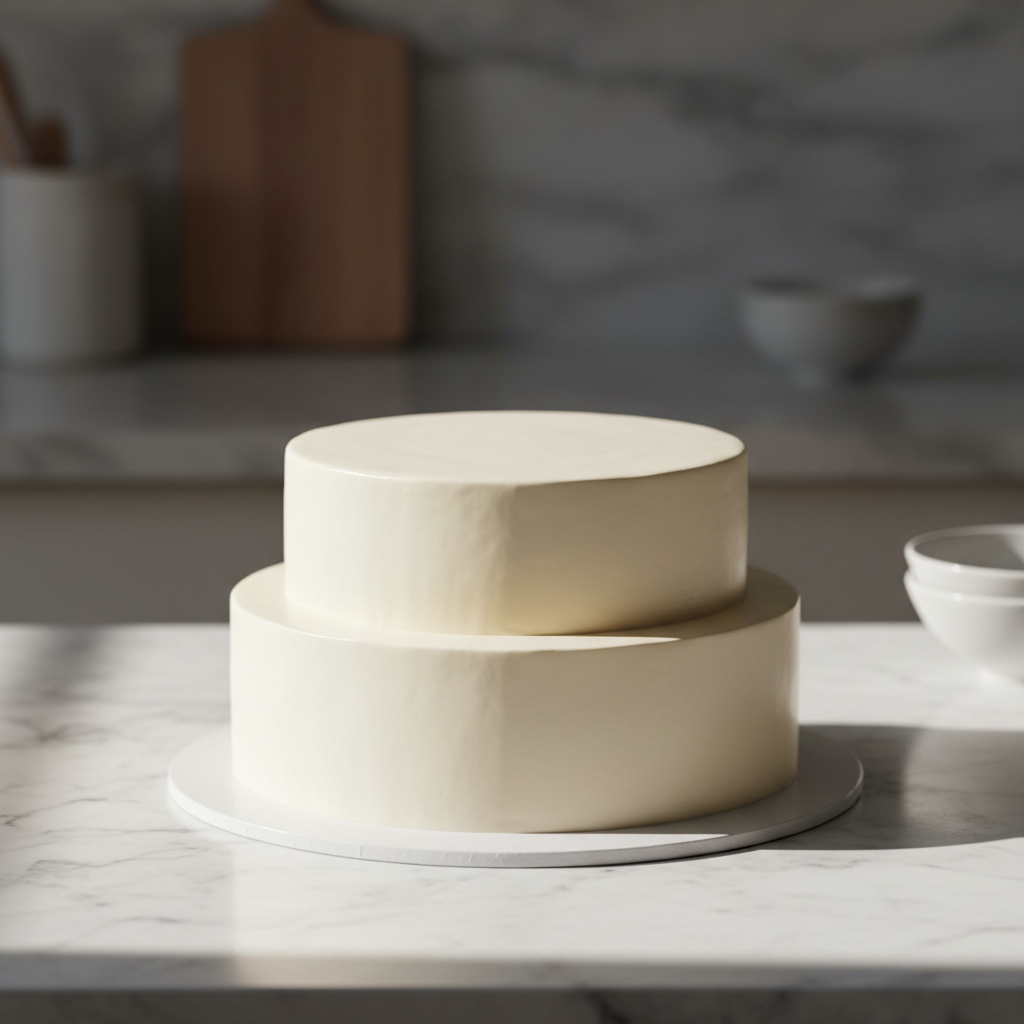
Many people assume that choosing ganache means being limited to dark brown tones, but white chocolate ganache offers the same structural benefits while allowing for any colour palette. Because it provides such a firm surface, it is also the best base for metallic paints, gold leaf, or intricate stencilling. If you try to stencil onto buttercream, the weight and moisture of the stencil can often ruin the finish. Ganache is sturdy enough to be handled, touched, and painted upon without losing those crisp borders you worked so hard to create. It is the ultimate marriage of engineering and art in the pastry world.
If you are looking for a cake that combines this level of precision with incredible flavour, we would be delighted to bake something special for you. You can browse our latest designs and place your order through the WaraCake website today.