
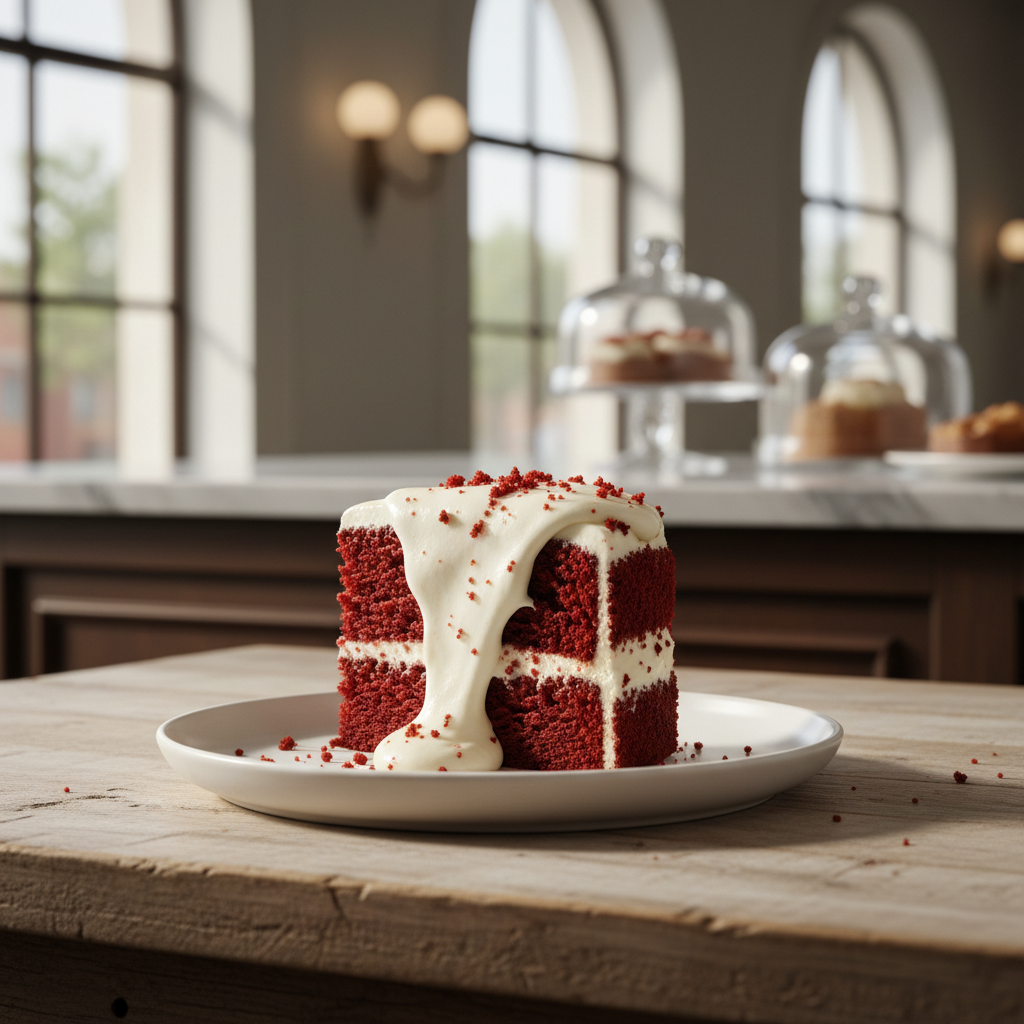
Discover the chemistry of acidity, cocoa, and leavening that gives red velvet cake its iconic texture and flavour.
The red velvet cake is perhaps the most misunderstood dessert in the modern bakery. Many people assume it is simply a chocolate cake dyed with a heavy hand of red food colouring, but that is a vast oversimplification. At its heart, red velvet is a chemistry experiment that relies on specific acidic reactions to achieve its signature fine crumb and subtle tang. While modern versions often lean on bottles of dye for that striking visual impact, the original beauty of this cake came from the way its ingredients behaved when mixed together in a bowl.
The acidic foundation of velvet
To understand the science of red velvet, one must first look at the role of acid. Most standard cakes rely on neutral milk or water, but red velvet requires buttermilk and vinegar. These two ingredients are not just there for flavour. When buttermilk and vinegar are introduced to the batter, they begin to break down the gluten strands in the flour. This process is known as tenderising. By weakening the gluten, the acid ensures that the cake has a velvet-like texture rather than a chewy or bread-like consistency. This is the reason for the name. Without that specific balance of acidity, you are simply eating a dry sponge.
The chemical reaction of cocoa powder
In the early days of baking, cocoa powder was not processed the same way it is today. Most cocoa was raw and untreated, meaning it was naturally acidic. When this acidic cocoa powder reacted with the buttermilk and baking soda in the recipe, a chemical shift occurred. The anthocyanins in the cocoa would turn a reddish-brown hue. This was the original red of the red velvet cake. At WaraCake, we understand that while modern Dutch-processed cocoa is darker and more neutral, adding that touch of cocoa is essential for the flavour profile, even if it no longer provides the full colour on its own. It provides a bridge between the vanilla and the tang of the buttermilk.
The role of leavening agents
Most cakes use baking powder, but red velvet almost always demands baking soda activated by vinegar. This creates an immediate release of carbon dioxide bubbles. Because the batter is thick enough to trap these bubbles, the cake rises beautifully without becoming overly dense. The timing here is critical. The moment the vinegar touches the baking soda, the clock starts ticking. If a baker waits too long to put the tins in the oven, the reaction peters out, and the cake will lose its characteristic lift. This is why professional bakers work with speed and precision when the final fold is made.
Oil versus butter in the batter
There is a long-standing debate about whether to use oil or butter in red velvet. Science actually suggests a combination or a preference for oil. Butter provides excellent flavour, but oil stays liquid at room temperature. This means that a cake made with oil will feel moister on the tongue. Because red velvet is often served chilled due to its cream cheese frosting, a butter-based cake can feel quite hard when taken out of the fridge. Using oil ensures that the velvet texture remains soft and approachable. It also allows the subtle flavours of the cocoa and buttermilk to shine through without being masked by the heavy fat content of butter.
The science of the cream cheese frosting
A red velvet cake is incomplete without its crown of cream cheese frosting. From a chemical perspective, this frosting provides the necessary fat and salt to balance the sugar in the sponge. Cream cheese contains lactic acid, which mirrors the tang found in the buttermilk inside the cake. This creates a cohesive flavour loop. The challenge for the pastry chef is stability. Cream cheese has a high moisture content, which can make frosting runny. Achieving the perfect ratio of butter to cheese ensures the frosting is stiff enough to hold its shape while remaining creamy enough to melt in the mouth.
Colouring and the psychological impact
In the modern era, we use food gel to get that bright crimson look. While it does not change the chemistry of the bake, it changes the way we perceive the taste. Studies in food science show that people expect a red cake to taste richer. This is why the visual element is so important. However, the secret is not to overdo it. Too much liquid colouring can thin the batter and lead to a metallic aftertaste. Using high quality gel colours allows for a vibrant finish without compromising the structural integrity of the cake. It is the marriage of old-fashioned chemistry and modern ingredients.
The assembly and cooling process
Precision does not end when the timer goes off. The cooling process is part of the science of moisture retention. If a red velvet cake is left in its tin for too long, it will steam itself and become mushy. If it is removed too early, the delicate crumb will fall apart. We find that wrapping the layers while they are still slightly warm can help lock in moisture, provided they are then chilled before frosting. This makes the cake easier to slice and ensures every bite is as soft as the name suggests.
If you would like to experience this scientific balance for yourself, you can explore the options available at WaraCake. We take pride in ensuring each layer is baked to the highest standards of the craft.
If you are looking for a perfectly balanced treat for your next celebration, you can browse our selection and find a cake that suits your taste. We handle the delivery so you can simply enjoy the results.