
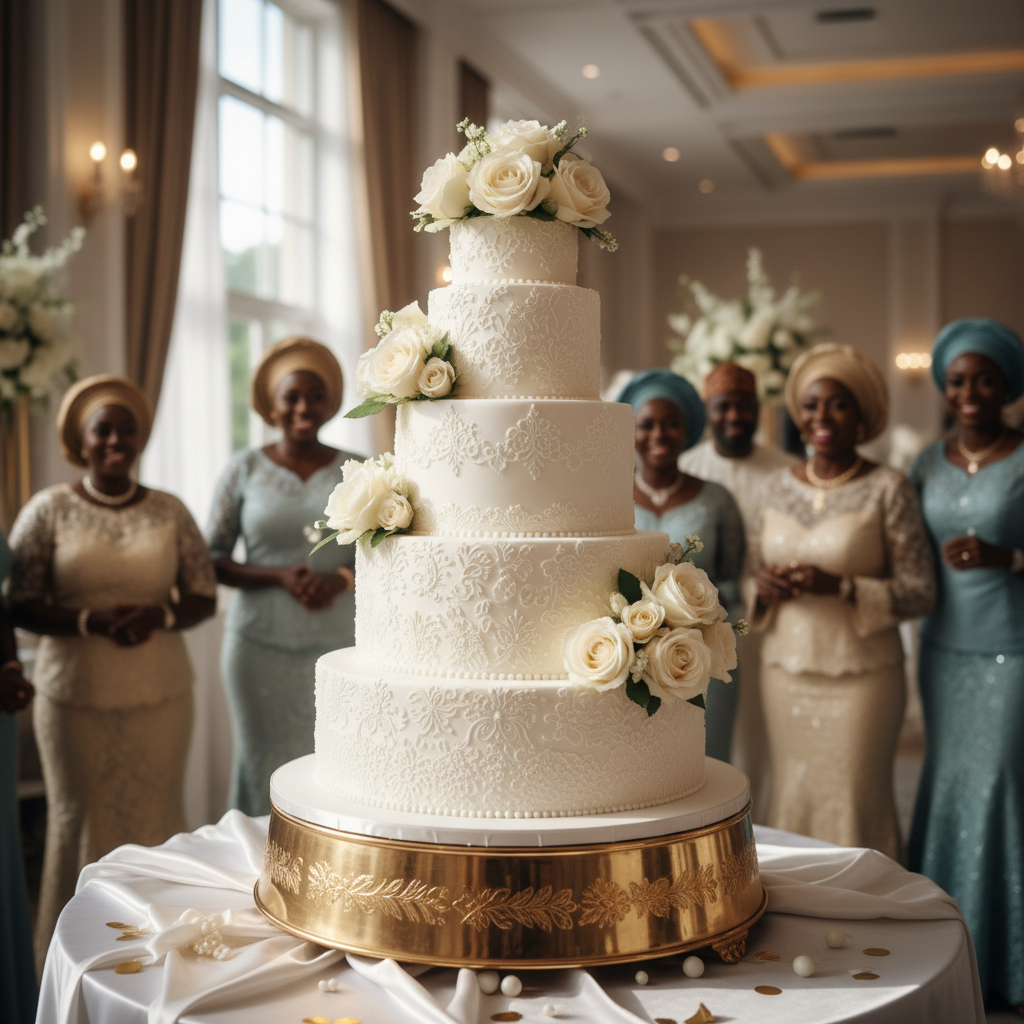
Navigating cake portions for a large Nigerian wedding can be tricky. Learn how to calculate serving sizes, choose the right tier shapes, and plan for your guest list.
Planning a wedding in Lagos or any major Nigerian city usually involves a guest list that seems to grow of its own accord. Between the extended family members, church groups, and work colleagues, the number of mouths to feed can be daunting. While you might have the jollof rice and small chops under control, the wedding cake often remains a point of confusion for many couples. You want a cake that looks magnificent standing in the center of the hall, but you also need to ensure that when it is finally sliced, every guest gets a taste of the celebration. Understanding how cake serving sizes work is the secret to balancing that grand visual impact with practical reality.
How Wedding Cake Slices Are Calculated
In the world of professional baking, a standard wedding guest serving is smaller than the large wedge you might cut for yourself at home on a Sunday afternoon. Most bakers calculate portions based on a finger slice, which is typically one inch wide, one inch deep, and about four to six inches high. This might sound small, but wedding cakes are often richer and more decadent than everyday sponge cakes. When served alongside a full course of Nigerian party food and desserts, this size is exactly what most guests need. If you are planning to serve the cake as the primary dessert rather than just a sweet treat at the end of the party, you might want to double the portion size in your calculations.
The Influence of Tier Shapes and Sizes
The shape of your cake tiers significantly changes how many people you can feed. Round cakes are the classic choice and offer a soft, elegant aesthetic, but square cakes actually provide more servings per tier. Because of their corners, square tiers are easier to cut into uniform grids, resulting in roughly twenty percent more cake than a round tier of the same width. For a typical Nigerian wedding with three hundred to five hundred guests, mixing different tier sizes is common. A base tier of fourteen inches, followed by twelve, ten, and eight inches, creates a towering effect while providing a substantial number of portions. Some couples also opt for dummy tiers made of polystyrene covered in icing to add height without the cost or waste of extra cake.
Accounting for the Take Home Culture
In Nigeria, a wedding cake serves two purposes. It is a dessert to be eaten at the venue, and it is often a memento to be taken home. Many guests expect a small piece of cake wrapped in foil or placed in a branded box to enjoy the next morning. If your family tradition leans heavily into this take-home culture, your serving math needs to shift. Instead of calculating for eighty percent of your guest list, which is the standard advice in many parts of the world, you should calculate for one hundred percent or more. This ensures that the servers do not run out of cake halfway through the reception, avoiding any awkwardness with your elder relatives or important guests.
Rich Fruit Cake vs Sponge Flavours
The type of cake you choose also dictates how it is served. Traditionally, Nigerian weddings featured heavy, alcohol-soaked fruit cakes. These are incredibly dense and can be cut into very thin, firm slices that hold their shape. Because fruit cake is so rich, guests are usually satisfied with a smaller portion. However, modern trends have shifted toward lighter flavours like red velvet, vanilla cream, and chocolate fudge. These sponge cakes are softer and more moist, meaning they are often cut into slightly larger slices to prevent them from crumbling. At WaraCake, we often see couples choosing a different flavour for each tier to give their guests variety, which is a lovely way to cater to different tastes.
The Logistics of Cutting and Distribution
Who cuts the cake matters just as much as how much cake you buy. If you leave the task to an inexperienced server or a well-meaning relative, they might cut slices that are too thick at the start, leaving nothing for the guests sitting at the back of the hall. It is always best to have a professional caterer or a designated person who knows how to slice a tiered cake. They should start by removing the top tier, which many couples choose to save for their first anniversary, and then work their way down. By cutting the cake into manageable rectangular columns first and then slicing those into individual portions, you get the maximum yield from every tier.
Budgeting for Larger Crowds
If you have a very large guest list but a specific budget, you do not necessarily need a seven-tier edible masterpiece. A popular strategy for Lagos weddings is to have a beautiful three or four-tier display cake for the photos and the traditional cutting ceremony, complemented by kitchen cakes. Kitchen cakes are large, plain rectangular sheet cakes kept behind the scenes. They are made of the same delicious recipe and frosting as the display cake but without the expensive decorations. When it is time to serve, the kitchen cakes are sliced up and brought out on trays. This allows you to feed a crowd of five hundred people efficiently without the logistical nightmare of transporting and stabilizing a massive vertical structure.
Planning your wedding cake should be one of the most enjoyable parts of your journey to the altar. By considering the shape of your tiers, the richness of your flavours, and the specific needs of your guest list, you can ensure that your cake is both a stunning centerpiece and a generous treat for everyone.
If you are ready to choose the perfect size and style for your big day, the team at WaraCake is here to help you get the measurements just right for your celebration. Our bakers specialise in creating cakes that taste as good as they look, ensuring your Lagos wedding is remembered for all the right reasons.