Explore the differences between naked and semi-naked cakes to find the perfect minimalist style for your next celebration or wedding.
The minimalist movement has influenced everything from architecture to interior design, so it was only a matter of time before it arrived in the pastry kitchen. For decades, the standard for a celebratory cake was a heavy layer of buttercream or a sheet of flawlessly smooth fondant that completely shielded the sponge from view. While these styles remain classics, a new aesthetic has taken hold that celebrates the beauty of the cake itself rather than hiding it. Naked and semi-naked cakes have transitioned from rustic novelties to sophisticated staples at weddings and birthdays across the globe. Understanding the nuances between these two styles is essential for anyone planning a celebration where the dessert serves as a primary visual focal point.
The fundamental appeal of the naked cake A naked cake is exactly what the name implies. It is a layered cake that features no external frosting on the sides. The layers of sponge and the fillings between them are entirely exposed, creating a striped effect that highlights the texture and colour of the bake. This style gained massive popularity because it feels honest and organic. In an era where many people are wary of overly processed foods or heavy, cloying sweets, the naked cake offers a more grounded alternative. It suggests that the cake was baked with care and that the quality of the sponge is high enough to stand on its own without being masked by sugar.
When to choose a fully naked cake The fully naked style works best for outdoor events or gatherings with a relaxed, bohemian theme. Because the cake is exposed to the air, it has a shorter shelf life than a frosted cake, which makes it ideal for events where the cake will be cut and served shortly after it is put on display. Garden parties, brunch weddings, and summer birthdays are the perfect settings for this look. It also suits specific flavours particularly well. A lemon poppy seed cake or a rich carrot cake with visible flecks of orange and spice looks wonderful when revealed. If the sponge has a beautiful natural colour, such as a deep golden brown or a vibrant red velvet, leaving the sides bare allows those colours to shine.
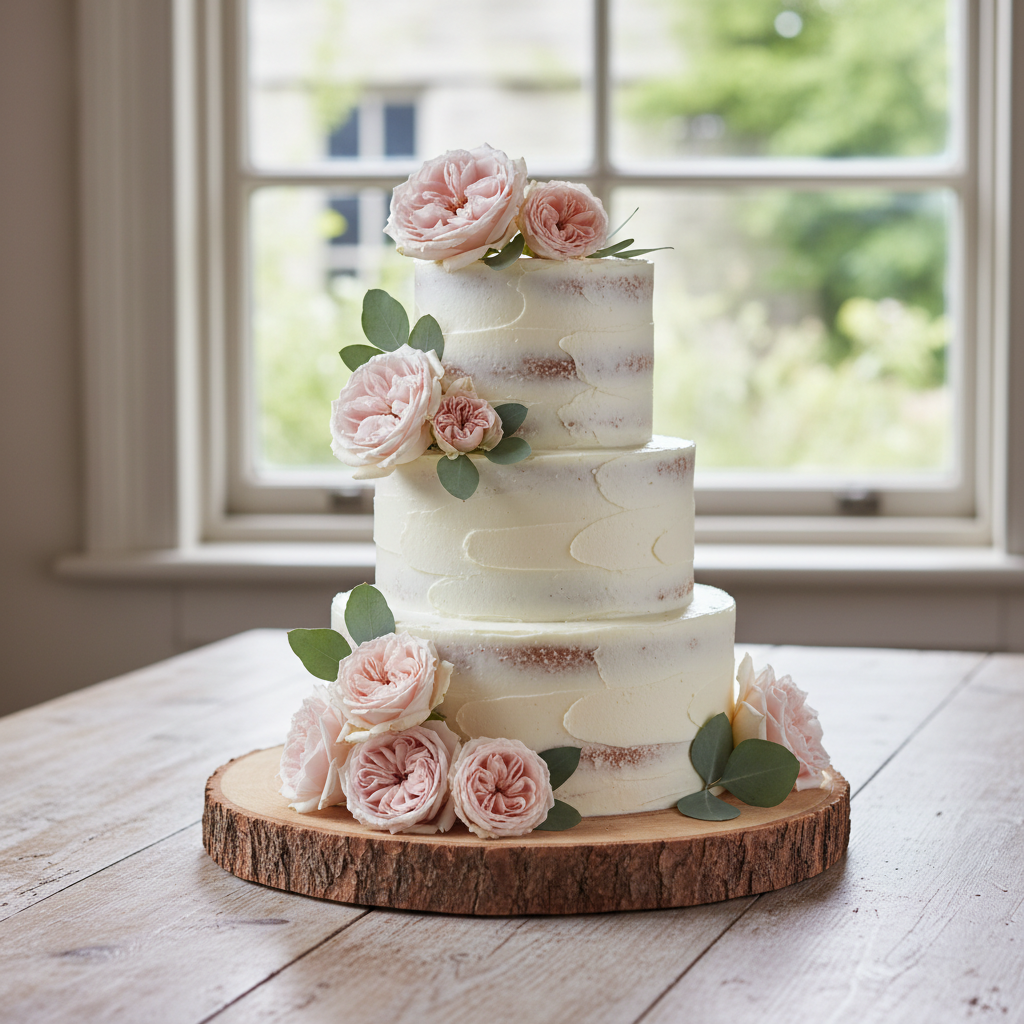
Mastering the semi naked aesthetic The semi naked cake, often referred to as a scraped cake, sits comfortably between a fully naked cake and a traditional frosted one. In this style, a thin layer of buttercream is applied to the sides and then scraped off using a bench scraper. This leaves a translucent veil of frosting that allows the crumbs and the colour of the sponge to peek through. This technique creates a misty, romantic appearance that is slightly more formal than its fully naked counterpart. It is often the preferred choice for couples who want a rustic look that still feels finished and elegant.
The practical benefits of semi naked frosting Beyond the aesthetic appeal, the semi naked style offers a significant practical advantage. That thin layer of buttercream serves as a barrier, trapping moisture within the sponge. One of the primary risks with a completely naked cake is that the edges can become dry if left out in a room with air conditioning or in a breezy outdoor setting. The semi naked finish mitigates this risk by sealing the cake just enough to keep it soft while still maintaining that sought after minimalist look. It is the perfect compromise for a long reception where the cake needs to sit on a pedestal for several hours before the ceremonial cutting.
The role of greenery and florals Because these cakes lack the intricate piping and sugar work of traditional designs, they rely heavily on toppings for character. Fresh flowers are the most common choice, creating a bridge between the dessert and the event decor. For a naked cake, wild and unstructured greenery like eucalyptus or olive branches can enhance the rustic charm. For a semi naked cake, more structured blooms like roses or peonies often look stunning against the white wash of the frosting. It is important to remember that not all flowers are food safe. Ensuring that stems are properly wrapped or that only non toxic blossoms are used is a critical step in the decorating process.
Fruit and seasonal accents Another way to bring life to these cakes is through the use of seasonal fruit. A naked cake piled high with fresh berries and a dusting of icing sugar looks like it came straight from a country kitchen. In the autumn, things like figs, grapes, and even small pomegranates can add a moody, sophisticated touch. Drips are also a popular addition to semi naked cakes. A caramel or white chocolate drip cascading over the lightly frosted edges adds a sense of decadence and provides a beautiful contrast to the matte finish of the buttercream.
Final considerations for your celebration When deciding between these styles at WaraCake, consider the climate and the venue. If you are hosting an event in a warm environment, a semi naked cake will hold up slightly better than a fully naked one. You should also think about your personal taste preference regarding sugar. If you find traditional cakes too sweet, the naked or semi naked options allow you to enjoy the flavour of the sponge and the filling without the overwhelming presence of a thick frosting layer. Whether you prefer the raw honesty of the naked cake or the refined smudge of the semi naked finish, both styles celebrate the art of baking in its purest form.
If you are currently planning a special event and want a cake that looks as good as it tastes, please visit WaraCake to view our range of designs. We will be happy to help you select the perfect finish for your celebration.