
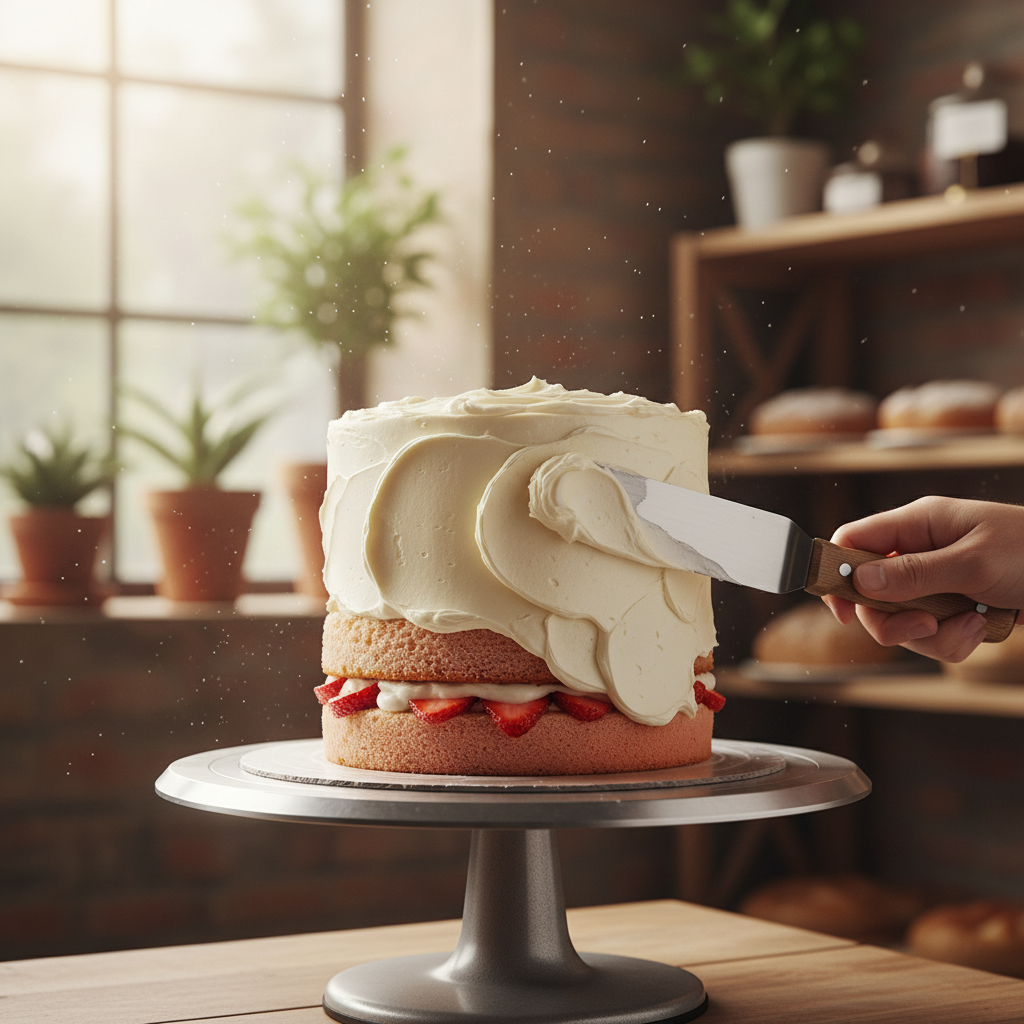
Learn the professional secrets to filling and crumb-coating a layer cake for a smooth, patisserie-quality finish every time.
The moment your cake layers emerge from the oven and cool down, the real magic begins. For many home bakers, the transition from individual rounds of sponge to a towering, professional masterpiece feels like the most daunting part of the process. You have the flavour right, but achieving those sharp edges and a perfectly level finish requires more than just a spatula and good intentions. Mastering the art of filling and crumb coating is what separates a homemade looking treat from a patisserie quality centrepiece. It is a foundational skill that relies on patience, the right tools, and a few trade secrets that keep the layers stable and the exterior pristine.
- Preparing your layers for height and stability
A professional finish begins long before you touch the frosting. One of the most common mistakes is attempting to stack cakes that have a slight dome on top. No matter how much filling you use, a domed cake will always be unstable and prone to leaning. Use a long serrated knife or a wire cake leveller to trim the tops of your sponges until they are perfectly flat. It is also helpful to chill your cakes in the fridge for at least an hour before you start. Cold cake is much firmer and produces fewer crumbs, making it significantly easier to handle. If you are working in a warm climate like Lagos, keeping your sponge chilled is essential to prevent the butter in your frosting from melting instantly upon contact.
- Essential tools for a smooth finish
You do not need a kitchen full of gadgets, but three specific tools are non-negotiable for a professional result. First is a revolving cake stand or turntable. This allows you to move the cake smoothly without stopping, which is the only way to get an even coat of frosting. Second is an offset spatula. The cranked handle keeps your fingers away from the icing while you spread. Finally, a bench scraper or icing smoother is vital for the side walls. This flat metal or plastic tool is pulled around the cake to scrape away excess frosting and create that signature flat surface.
- The dam method for soft fillings
When you are filling your cake, the weight of the upper layers tends to push the filling toward the edges. If you are using a soft filling like jam, lemon curd, or chocolate ganache, this can cause the sides of your cake to bulge. To prevent this, pipe a ring of stiff buttercream around the outer edge of your cake layer first. This acts as a dam. You can then pour your softer filling into the centre of this circle. This simple structural trick ensures that your filling stays where it belongs and your cake remains perfectly cylindrical. At WaraCake, we often use this method to ensure our specialty flavoured cakes look as good as they taste while keeping different textures neatly separated.
- Mastering the crumb coat
The crumb coat is the most important step that amateur bakers often skip. It is a very thin layer of frosting applied to the entire exterior of the cake to lock in crumbs. Think of it as a primer for paint. Using your offset spatula, spread a thin layer of icing over the top and sides, pressing it into the gaps between layers. Do not worry if it looks messy or if crumbs are visible in this layer. The goal is to trap them so they do not end up in your final decorative layer. Once the cake is fully covered, use your bench scraper to remove as much excess as possible until the cake layers are nearly visible through the frosting.
- The importance of the chill break
Once your crumb coat is applied, the cake must go into the fridge. This step is not optional if you want a professional look. Chilling the cake for twenty to thirty minutes allows the crumb coat to firm up and creates a hard shell. This stability makes the final application of frosting much easier because the cake will not move or wobble as you work on it. If you skip this, your final layer of icing will mix with the crumbs you just tried to hide, and your edges will lose their sharpness. Use this time to clean your tools and ensure your remaining frosting is at a smooth, spreadable consistency.
- Applying the final layer and achieving sharp edges
After the chill break, you are ready for the final coat. Apply a generous amount of frosting to the top of the cake first, pushing it out toward the edges. Then, work your way down the sides. Do not be afraid to put on more frosting than you think you need. You will be scraping much of it off to get that smooth finish. Hold your bench scraper at a forty five degree angle against the side of the cake and spin the turntable in one continuous motion. To get sharp top edges, use your offset spatula to gently swipe the overhanging frosting from the sides toward the centre of the cake. This creates a crisp corner rather than a rounded shoulder.
- Final touches and storage
Once you are satisfied with your smooth finish, your cake is ready for decoration. Whether you choose to add a chocolate drip, piped borders, or fresh flowers, your stable and level base will make the process seamless. Remember that a finished cake should be stored in a cool place, but it is often best served at room temperature to ensure the sponge is soft and the buttercream is creamy. If you have mastered these steps, you have conquered the most difficult part of cake assembly. Creating beautiful desserts is a journey of practice, and every layer you stack brings you closer to perfection.
If you would like to enjoy a professionally finished cake without the work of levelling and chilling, WaraCake offers a wide selection of beautifully crafted designs delivered across Nigeria.
Should you feel inspired to skip the kitchen prep today, you can find a variety of expertly frosted treats ready for your next celebration at WaraCake.